

With the era of growing digital transformation, in particular the data being generated through the use of technological devices and services, there has been an increase in the availability of digital data reflecting human and economic development. This data has enormous implications on how communities are seen and treated. Despite immense availability of digital data; the power of data to sort, categorise and intervene has not yet been explicitly connected to a social justice agenda. The current data revolution we see is just a technical one. There is a need to establish data justice which is based on the principles of visibility, engagement with technology and anti-discrimination. The production of digital data collectively informs fairness in the way communities are made visible, represented and treated. Digital data has the innate capacity to provide equitable allocation of resources (distributive justice), by making marginalised communities visible.
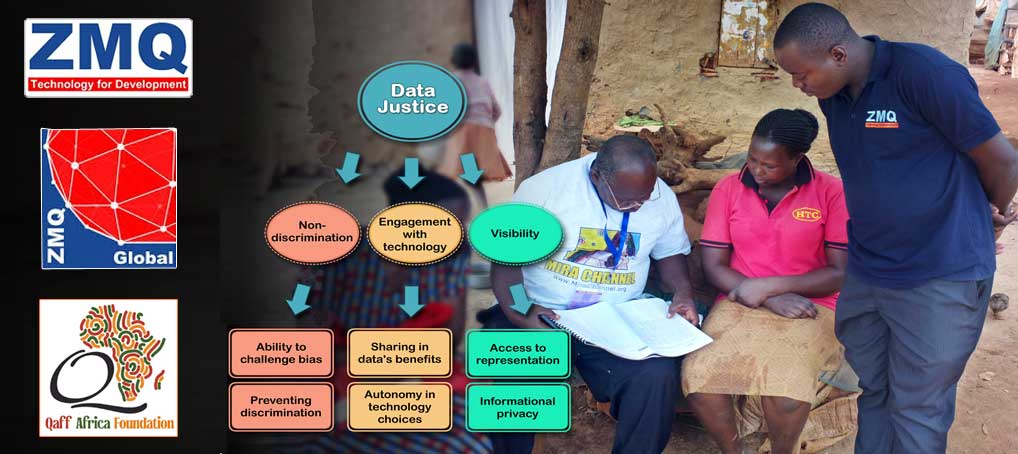
While working at the last-mile, ZMQ focuses on improving self-reliance, social justice, and participatory decision-making of the local communities. It uses the fundamental principles of data justice, that the data should make visible community-driven needs, challenges, and strengths; be representative of the community; and treat it in ways that promote self-determination of the communities. They are based on community-based participatory research which positions community members as experts as they already have the capacity to conduct systemic inquiry into their own lived experiences. When we build a world where everyone has the capacity to participate, we will also be able to find solutions that work for everyone.