MIRA CHANNEL: INTRODUCTION
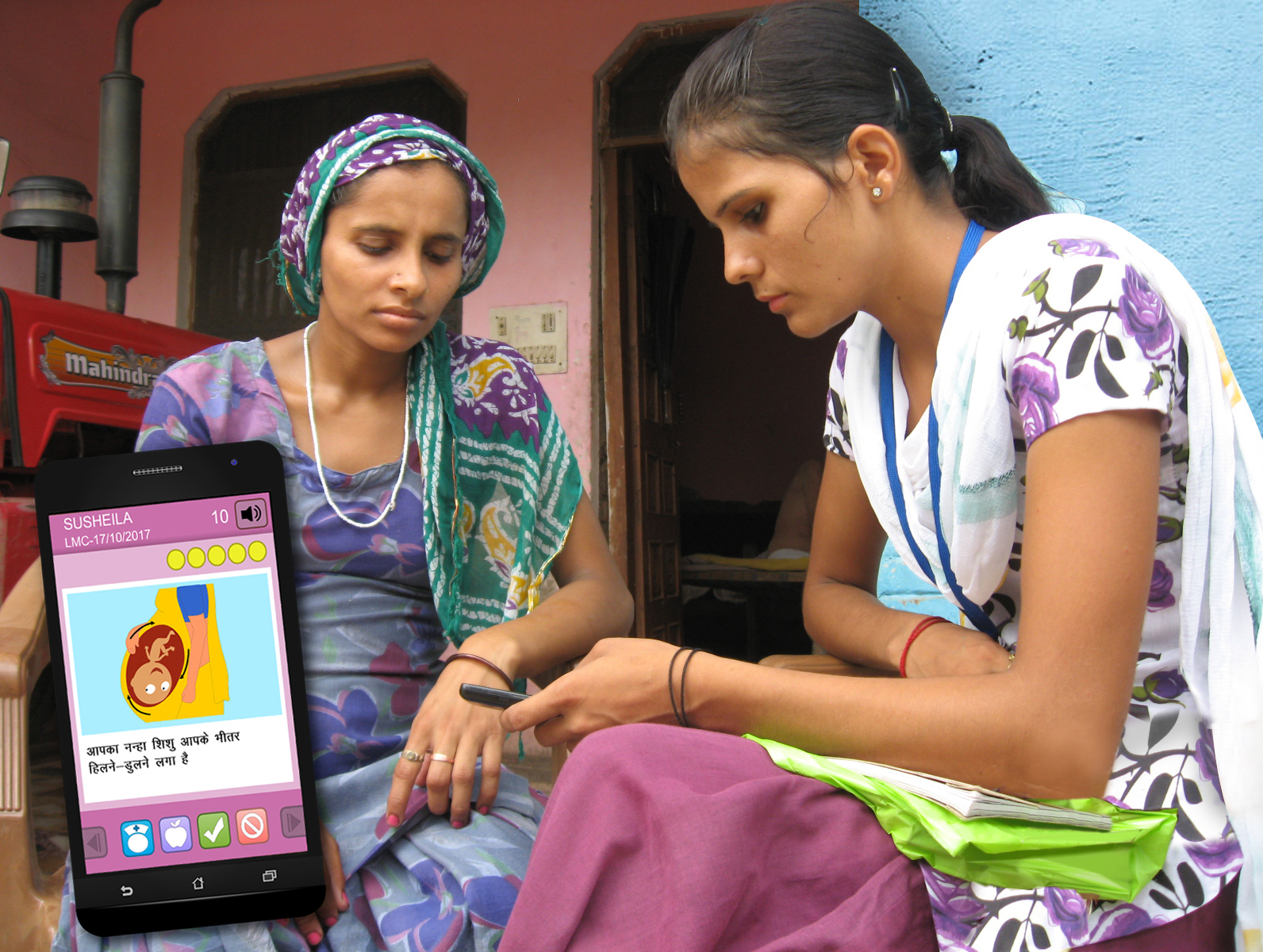
MIRA Channel is a last-mile digital maternal and child health platform designed by ZMQ to connect vulnerable and marginalized women with the formal public health system. The platform operates through trained community health workers known as MIRAs, who serve as the last-mile interface between households and primary health facilities. Using a mobile-based MIRA Toolkit, MIRAs register pregnant women and track the full continuum of maternal and child health—from early pregnancy through postnatal care and routine childhood immunization. During pregnancy, MIRAs conduct weekly home visits, collecting baseline information such as maternal age, parity, pregnancy history, past complications, and known medical conditions like anemia, hypertension, or gestational diabetes.
MIRA-AI: Agentic AI System for High-Risk Pregnancy MANAGEMENT
To enhance early detection of pregnancy complications and support community health workers with decision intelligence, ZMQ is developing MIRA-AI, an Agentic Artificial Intelligence system integrated with the MIRA Channel. The MIRA-AI architecture is based on a multi-agent framework, where specialized AI agents collaborate to analyze maternal health data, interpret risk signals, and generate context-specific guidance for women, community health workers, and clinicians. The system draws upon several knowledge sources, including maternal health clinical guidelines, high-risk pregnancy knowledge bases, public health protocols, historical MIRA program data, and real-time field data collected during weekly visits. The first layer of the system is the Data Integration Agent, which aggregates and standardizes incoming data streams from the MIRA Toolkit, including demographic information, ANC visit records, weekly HRP screening responses, vital indicators, and pregnancy history. This structured dataset is then processed by the Maternal Health Knowledge Agent, which references curated clinical knowledge bases derived from obstetric guidelines, WHO maternal health protocols, and high-risk pregnancy classification frameworks. The knowledge agent interprets symptoms and clinical indicators to determine medically relevant risk patterns.
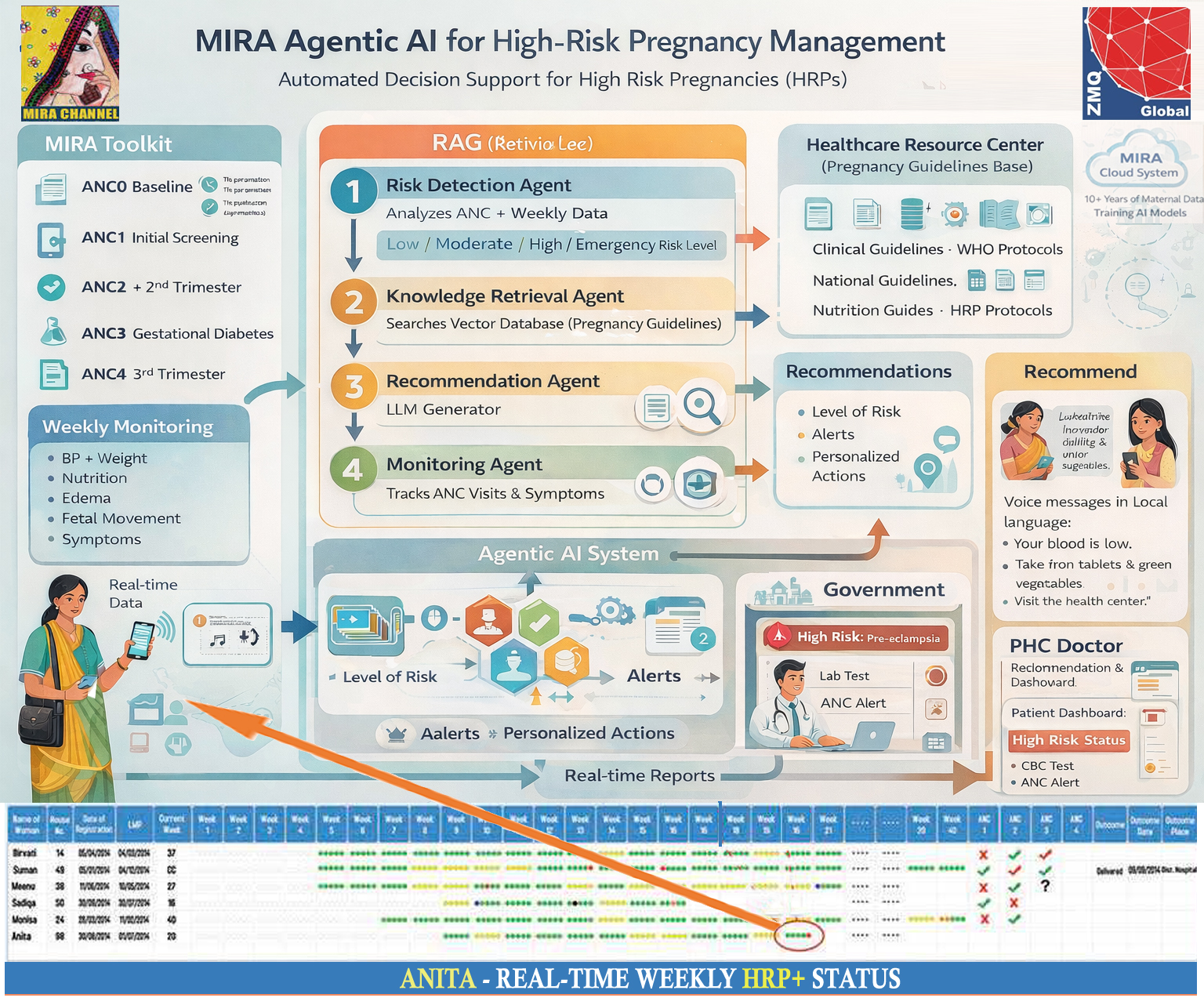
A Risk Assessment Agent then evaluates the probability of high-risk pregnancy conditions by combining rule-based medical logic with machine learning models trained on historical pregnancy data collected through the MIRA platform. This agent dynamically calculates a daily HRP risk score and identifies early warning indicators that may require closer monitoring or clinical intervention. A Reasoning and Decision Agent synthesizes these insights to generate recommended actions, including referral alerts, additional monitoring requirements, or behavioral guidance.
MIRA-AI: Communication Agent - Three level
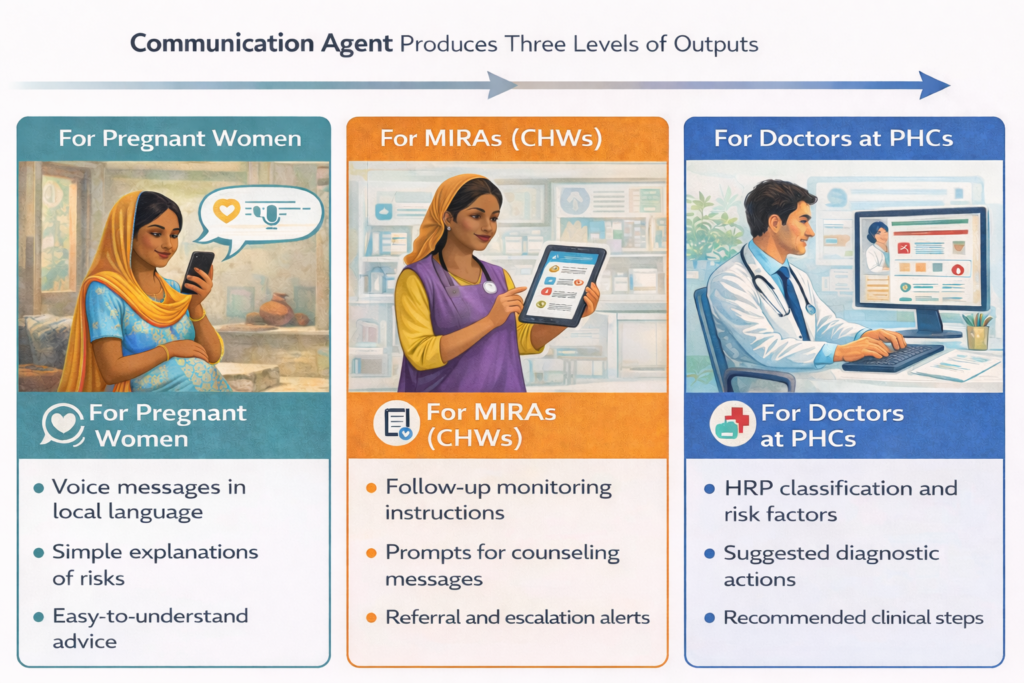
These recommendations are translated into role-specific outputs by the Communication Agent, which produces three levels of information: simplified explanations and advice for pregnant women in local languages; operational instructions for MIRAs to guide counseling, follow-up visits, or referrals; and detailed clinical summaries for doctors at Primary Health Centers, including risk classification and suggested diagnostic or treatment actions. The system is supported by a continuously evolving Maternal Health Knowledge Base, which integrates global obstetric knowledge, contextualized regional health protocols, and anonymized field data to improve predictive accuracy over time.
The modular design of the MIRA-AI architecture allows it to be integrated with existing maternal health m-Health systems, enabling governments and health programs to strengthen early detection of high-risk pregnancies while maintaining the critical role of community health workers in last-mile healthcare delivery.